
Last updated November 22, 2026
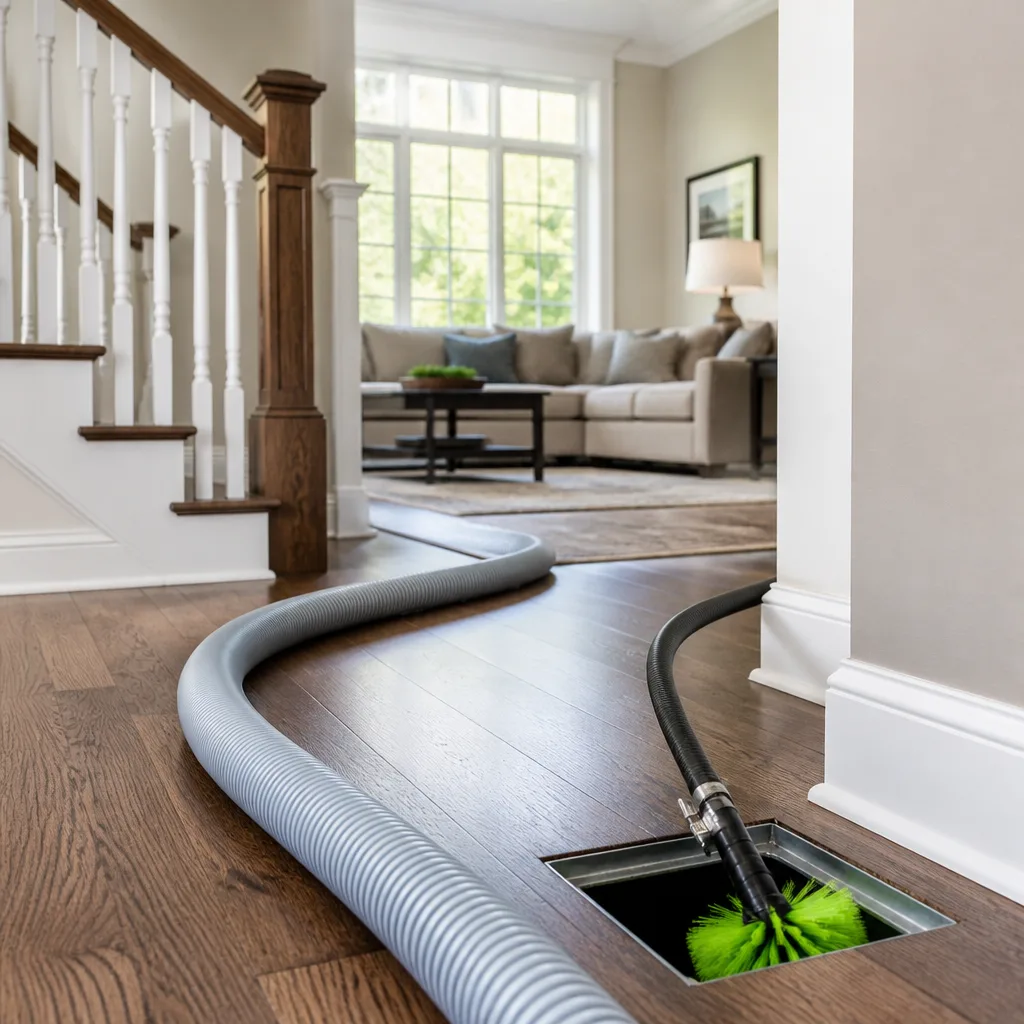 Whole-home duct cleaning
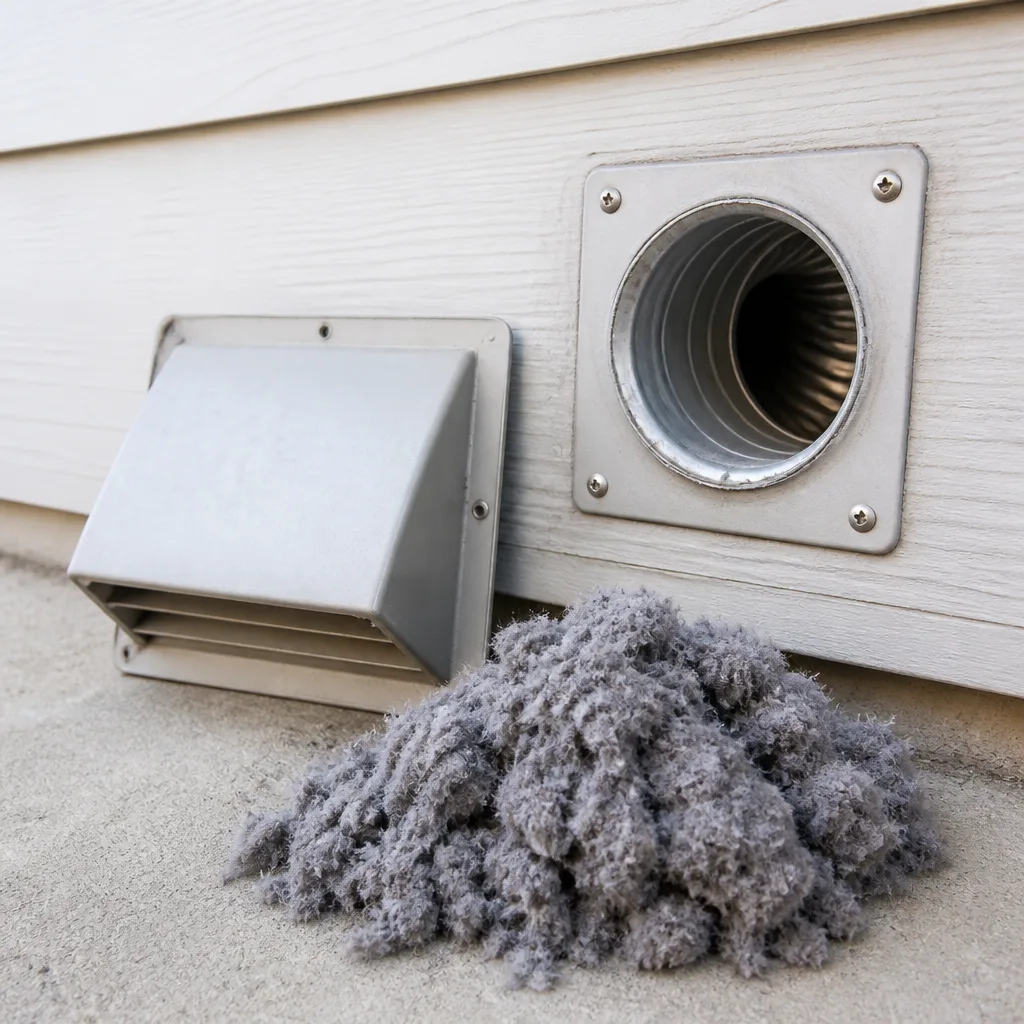 Dryer vent cleaning
 Camera inspection
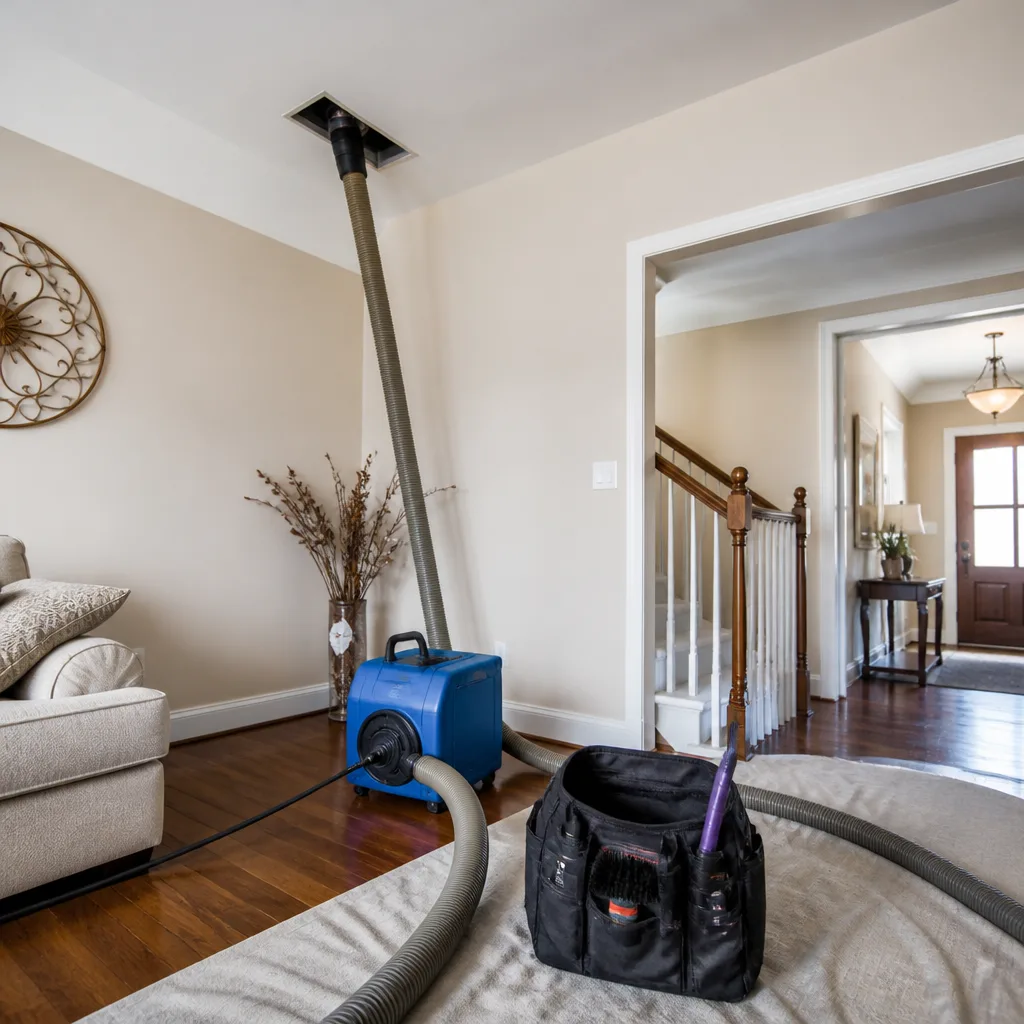 Sanitizing & deodorizing
Whole-system duct and dryer vent check with before-and-after photos - you see exactly what came out of your vents
That "$99 whole-house special" is a bait ad - the real number appears once they are in your hallway, or the "clean" is a shop-vac at the register. We photograph the inside of your ducts before and after instead.
Air Duct Cleaning Troubleshooting in Bensonhurst: Common Problems and How to Fix Them
If a technician shows up to fix weak airflow and goes straight to cleaning without inspecting the blower wheel, the flex duct connections, or static pressure, you’re paying for the wrong service. That’s the uncomfortable truth about most duct work in Bensonhurst. The complaints homeowners call about – weak airflow, musty odors, rooms that won’t heat evenly – usually aren’t vague “dirtiness.” They’re symptoms of specific mechanical failures somewhere in the system, and cleaning alone won’t touch most of them. This guide maps each symptom to its likely root cause, explains what a real diagnostic looks like, and shows you when a job should pivot from cleaning to repair, sealing, or component replacement.
Quick Answer
Most air duct “problems” in Bensonhurst trace back to one of four things: heavy debris buildup restricting airflow, disconnected or collapsed flex duct runs, leaks at joints and boots that pull in unconditioned air, or a blower and filter issue that has nothing to do with the ducts themselves. Proper troubleshooting means testing static pressure and inspecting connections before cleaning – not cleaning first and hoping the symptom goes away. If you clean without diagnosing, you’ll often fix the surface and leave the actual failure in place.
Styles & brands we work with
- Whole-home duct cleaning
- Dryer vent cleaning
- Camera inspection
- Sanitizing & deodorizing
Table of Contents
- Mapping Your Symptoms to the Right Cause
- What Negative-Pressure Testing Reveals That Eyes Miss
- Why Musty Odors Come Back After Cleaning
- Collapsed and Disconnected Flex Duct: The Hidden Airflow Killer
- When the Problem Is the Blower, Not the Ducts
- When Troubleshooting Should Pivot to Repair and Sealing
- What a Proper Diagnostic Actually Looks Like
- Bensonhurst Building Stock and Duct Reality
Mapping Your Symptoms to the Right Cause
Start with the complaint, not the duct. In our experience, homeowners in Bensonhurst describe the same handful of symptoms, and each one narrows the diagnosis considerably before anyone touches a tool.
Weak airflow from most vents
Weak airflow across the whole house usually points to a restriction upstream of the vents: a clogged filter, a dirty blower wheel, a collapsed return, or heavy debris in the main trunk. If the airflow is weak at some vents but strong at others, the problem is more likely a specific branch run – a disconnected joint, a crushed flex section, or a damper stuck closed. That distinction matters. Whole-house weakness rarely justifies cleaning alone; branch-specific weakness points to a physical break you can usually locate.
Musty or “dirty sock” odor
A musty smell in the supply air is a moisture signal. Dust that has absorbed moisture in a cool, humid duct will smell, and cleaning removes the dust – but if the moisture source stays, the smell returns within weeks. Odor is a symptom; the cause is often a leaky return pulling in humid air from a crawlspace or a condensing coil that isn’t draining properly. We’ll come back to this in detail below.
Uneven room temperatures
Hot and cold rooms in the same house trace most often to balance and leakage. Leaky duct joints in an unconditioned attic or between floors bleed conditioned air before it reaches the room. In Bensonhurst’s attached rowhouses and semi-detached homes, shared wall cavities can hide leaks that a visual inspection will never catch without pressure testing.
Excess dust settling after a recent cleaning
If dust returns within a week or two of a cleaning, either the job was incomplete or the system is re-contaminating itself through leaks. A properly sealed system should not refill with visible dust that fast. If it does, pressure testing is the next step, not another cleaning.
Health symptoms that track with HVAC cycles
When allergy or respiratory symptoms worsen when the system runs, the duct system deserves a real look – but the answer is rarely just cleaning. Contaminant source identification matters more than agitation. If you suspect the ducts are contributing, the broader question of air duct cleaning scope is worth understanding before you book a visit.
What Negative-Pressure Testing Reveals That Eyes Miss
Visual inspection tells you what a duct looks like where you can see it. Negative-pressure testing tells you whether the system is actually holding – whether air is going where it should, and whether the returns are pulling in air you don’t want.
Here’s how the test works in practice. The technician seals the duct system at the register boots, connects a calibrated fan and manometer, and measures how much air the system loses at a controlled pressure. On a healthy system, leakage is small. On a typical residential system, leakage is often significant, and every percentage point of leakage is conditioned air you paid to heat or cool that never reaches the room.
Where this matters most for a Bensonhurst rowhouse or semi-detached home:
- Leaks in wall cavities and between floors that no camera can reach but pressure testing exposes immediately.
- Disconnected flex runs in soffits, where a joint has separated silently and the supply air is venting into the framing.
- Return-side leaks that pull in humid basement or crawlspace air, which is the most common driver of musty odor.
- Restricted trunks, where debris or a collapsed liner is choking the main supply.
We use Nikro negative-pressure equipment for exactly this reason. It holds the system under controlled vacuum and captures what comes loose, so dislodged contaminants are extracted rather than redistributed through the living space. When paired with Abatement Technologies filtration units – the same class of equipment used in professional remediation environments – the technician gets a clearer picture of the system’s real leakage rate and can measure improvement after sealing. That measured improvement is what separates a diagnostic job from a cleaning job. If you want the full picture of what a diagnostic-driven cleaning involves, our air duct cleaning Bensonhurst overview walks through the equipment and process from start to finish.
Why Musty Odors Come Back After Cleaning
If musty odor returns weeks after a cleaning, the cleaning addressed the symptom and left the moisture source untouched. Ducts don’t generate mold on their own. Mold needs moisture, and in Bensonhurst HVAC systems the moisture almost always comes from one of four places.
The four moisture sources that get missed
- Condensate problems at the air handler. A clogged or improperly pitched drain pan line lets water pool near the coil, saturating the surrounding ductboard and the return plenum. Cleaning the duct downstream fixes nothing because the wet material keeps feeding the smell.
- Return ducts drawing humid air. Leaky returns in basements and crawlspaces pull in damp air that condenses on cold duct surfaces. The ducts aren’t the source; they’re the collection point.
- Oversized or short-cycling systems. When an AC runs in short bursts, evaporator coils stay wet between cycles and the duct surfaces stay humid. Nothing dries out.
- Ductboard and fiberglass liner that has been wetted. Once fiberglass ductboard absorbs water, it stays damp for a long time. Cleaning can remove surface growth, but saturated liner will keep supporting regrowth unless it’s dried, repaired, or replaced.
Source vs. symptom is the whole distinction
If the mold in your ducts is a symptom, cleaning helps – it removes the visible growth and the spores currently suspended in the system. If mold in the ducts is the source – meaning it’s growing on duct surfaces because of a moisture problem elsewhere – cleaning alone will not solve it. The correct sequence is to find and fix the moisture, then clean, then treat with an air quality and sanitizing service using Honeywell or Aprilaire products, then verify the system stays dry. That sequence is what our team follows on every job, and it’s why we won’t recommend cleaning as a first step when an obvious moisture source is still active.
If you’ve had a cleaning in Bensonhurst and the smell came back, the next call shouldn’t be another cleaning. It should be a diagnostic visit. Call (833) 483-0627. We answer 24/7. Fast dispatch from 7am to 7pm, Sunday through Friday. The estimate is free.
Collapsed and Disconnected Flex Duct: The Hidden Airflow Killer
Disconnected and collapsed flex duct is the single most underdiagnosed cause of weak airflow we see in Bensonhurst homes. It’s also invisible from a supply register, because the failure usually happens somewhere between the air handler and the room – in a soffit, an attic, a crawlspace, or inside a wall cavity.
How flex duct fails
- Collapse from poor support. Flex duct needs regular support; long unsupported runs sag, kink, and restrict flow to a fraction of the design rate.
- Sharp bends at the register boot. A 90-degree kink right at the takeoff is common and silently chokes airflow to a single room.
- Disconnected joints. Tape fails, collars loosen, and the flex separates from the trunk or boot. The duct is still “there”, but the air is venting into the framing.
- Crushed sections behind drywall. Rerouted plumbing or electrical work can crush a flex run with nobody the wiser.
How to tell flex duct failure from dirty duct
The clue is pattern. A dirty duct system performs poorly everywhere, gradually. A failed flex run performs poorly in one or two rooms and strongly in the rest, and it usually gets worse in a step rather than a slide. If a single vent has weak flow while its neighbors have strong flow, don’t pay for a cleaning first – ask for a static pressure test and a visual of the flex run feeding that vent.
We repair disconnected and collapsed flex runs as part of our duct repair and sealing work, because there’s no point cleaning a system that’s bleeding air into wall cavities. Once the run is reconnected, properly supported, and sealed, the cleaning actually does what it’s supposed to. This is also why we handle HVAC cleaning alongside the ducts themselves – the failures usually connect, and addressing one without the other leaves the underlying problem in place.
When the Problem Is the Blower, Not the Ducts
A dirty blower wheel looks almost identical to a duct restriction from the homeowner’s side of the conversation. Weak airflow, whistling vents, uneven temperatures – the same symptoms. And if the blower is the problem, no amount of duct cleaning will fix it.
The blower wheel test
The blower wheel sits inside the air handler and moves every cubic foot of air the system delivers. When its vanes load up with dust, airflow drops without any noise change, because the motor is still running but moving much less air. A quick visual of the wheel – if there’s a service port – usually reveals a caked layer of dust on the vanes. That’s your answer. The ductwork may also need cleaning, but the blower needs cleaning first, or the system will still underperform after the ducts are done.
Other component failures that mimic duct problems
- Dirty or undersized filter. A restricted filter does more damage than most people realize. It starves the blower and can ice the coil in cooling season.
- Failed run capacitor or failing blower motor. Intermittent airflow loss with a warm smell is often electrical. This is a component replacement, not a cleaning.
- Improperly sized return. Systems installed with undersized returns will always feel starved. Pressure testing reveals it quickly.
- Frozen or fouled evaporator coil. When cooling airflow drops and the coil ices over, cleaning won’t fix it – the coil needs to be assessed and cleaned as a separate function.
If a technician you’ve called starts cleaning ducts without checking the blower wheel, the filter, and the coil, they’re skipping the three cheapest and most common causes of the symptom you called about. Any proper diagnostic start with those three.
When Troubleshooting Should Pivot to Repair and Sealing
Cleaning is the right answer when the system’s mechanical integrity is sound and the problem is genuinely contamination. Cleaning is the wrong answer when the system’s integrity is the problem. The pivot point is straightforward once you know what you’re looking at.
Pivot to sealing when:
- Pressure testing shows leakage above normal, especially on the return side.
- Dust returns within days of a cleaning – a strong sign the system is pulling in unfiltered air.
- Musty odor returns after a cleaning because returns are pulling humid air.
- Rooms nearest the air handler are comfortable and rooms furthest away are not.
Pivot to repair or replacement when:
- Flex duct is visibly collapsed, disconnected, or crushed behind a wall or soffit.
- Ductboard or fiberglass liner is saturated and can’t be dried.
- Register boots are loose, damaged, or missing dampers.
- The blower, coil, or motor needs cleaning or replacement as a separate repair.
Doing cleaning in-house after sealing or repair is the whole point of offering both. If a cleaning company doesn’t do repairs, they’ll clean, tell you airflow is a “system design issue”, and move on. If a repair contractor doesn’t do cleaning, they’ll seal the system and leave the debris in it. You need both in the same visit. That’s the practical reason we scope repair, cleaning, and air quality treatment in a single call – you shouldn’t be coordinating a second contractor after the first leaves.
What a Proper Diagnostic Actually Looks Like
Here’s the sequence a proper diagnostic should follow. If a technician you’ve called deviates meaningfully from this, ask why.
- Interview the homeowner against the symptom map. Which vents, which rooms, which season, whether symptoms track with HVAC cycles. This is 10 minutes and saves hours.
- Inspect the air handler and blower wheel. Confirm filter condition, blower condition, and coil condition before touching the ducts.
- Walk the accessible duct runs. Look for disconnected flex, loose boots, damaged dampers, and signs of moisture.
- Run negative-pressure testing with Nikro equipment. Measure leakage and airflow against a baseline so you know what you’re working with.
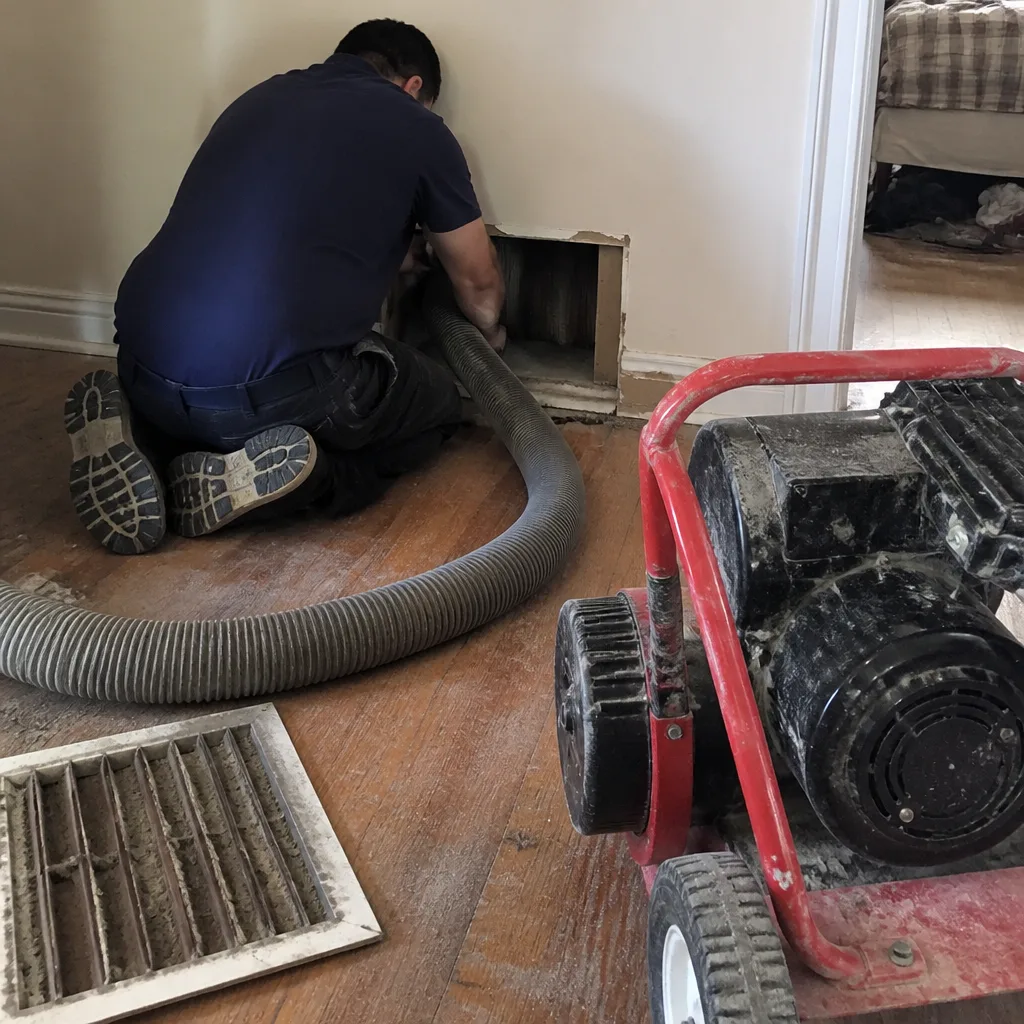
- Take before photos of every vent and every duct run you’ll address. Evidence matters, and it’s the homeowner’s to keep.
- Agree on the scope and price before work starts. Cleaning only, cleaning plus sealing, cleaning plus repair, or cleaning plus air quality treatment – decide up front.
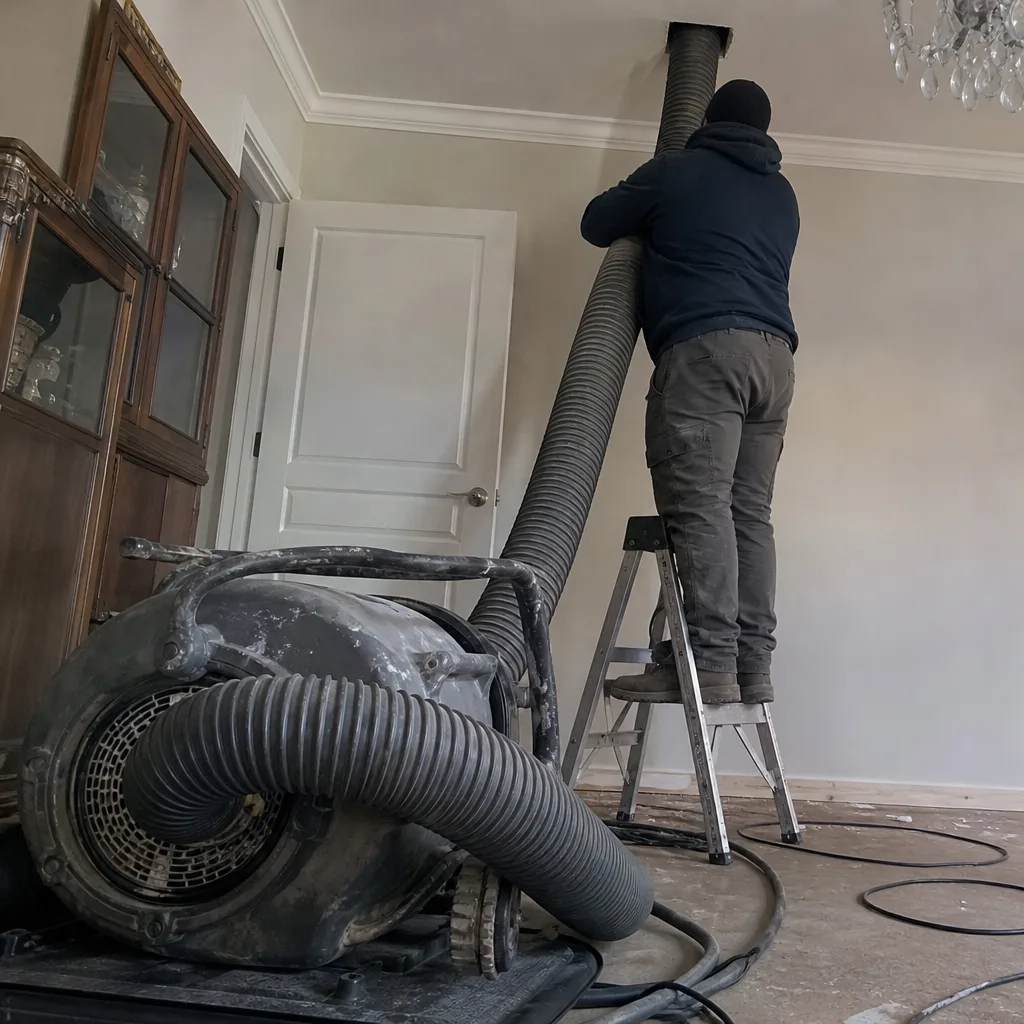
- Do the cleaning with Rotobrush rotary agitation and HEPA-filtered extraction. Rotary tools physically scrub duct surfaces; a shop vac can’t do this and shouldn’t be presented as if it can.
- Verify with post-cleaning photos and a re-measure where relevant. If sealing was part of the scope, the leakage number should drop measurably.
Every step in that sequence exists for a reason. Skipping step 2 means you’ll clean ducts for a blower problem. Skipping step 4 means you won’t know if the system is leaking. Skipping step 5 means you can’t prove the work was done. And skipping step 8 means nobody, including the technician, knows whether the job actually fixed the symptom.
Bensonhurst Building Stock and Duct Reality
The housing that makes up most of Bensonhurst – rowhouses, semi-detached homes, and low-rise multi-unit buildings, many dating from the mid-20th century – creates a specific set of duct-reality problems. Duct systems in these buildings have usually been modified, extended, or partly replaced over time, and the modifications are where most failures hide.
What we look for in older Bensonhurst homes
- Extender flex runs added to reach new rooms without re-engineering the trunk, often kinked or unsupported.
- Sheet-metal trunks with long-separated joints. The tape fell off decades ago; the gap remains.
- Returns shared between floors or units, which cross-contaminate air between living spaces if not properly sealed.
- Ductboard installed in humid basements, which is a strong candidate for the musty-odor problem we covered above.
- Dryer vent runs through shared interior walls that are too long, kinked, or clogged. We include dryer vent cleaning in every scope for a reason: a clogged dryer vent is a fire hazard, and in tight building stock that risk compounds.
For landlords and property managers in Bensonhurst
Multi-unit buildings put a different lens on duct problems. Air that leaks between units is an air quality issue for tenants and a liability exposure for the building. If tenants in a Bensonhurst walk-up report musty odors or uneven heat, a system-wide diagnostic is usually the correct first step, not cleaning a single unit’s ducts. Getting the sealing and repair right protects tenant health and prevents repeat complaints. Professional-grade equipment matters more here, not less – Abatement Technologies filtration is the same class of unit used in remediation work, which is why we bring it to residential jobs as well.
Clean ducts are only half the job in buildings like these. The other half is the structural integrity of the system – and that’s the part that shows up in tenant complaints.
Common Mistakes to Avoid
- Cleaning before diagnosing. If the symptom is weak airflow, a dirty filter, blower issue, or flex failure is more likely the cause than debris. Cleaning without testing wastes money and hides the real problem.
- Accepting a per-vent price. Per-vent pricing pushes a cleaning toward “just do the visible vents” and skips the trunk and return – which is where most of the contamination actually sits. A whole-system flat price agreed up front is what protects you.
- Skip the before-and-after photos. If a company won’t photograph the inside of your ducts before and after the job, you have no way to know the work was done. Insist on it in Bensonhurst just as you would anywhere else.
- Treating musty odor as a cleaning problem. Musty odor is a moisture problem. Cleaning without addressing the moisture source guarantees the smell comes back within weeks.
- Ignoring flex runs behind walls. A collapsed flex run feeding a room will not show up on a visual inspection of the register, but it will keep that room cold every winter. Ask for a static pressure test before accepting a cleaning-only scope.
- Hiring a shop vac as a “professional cleaning.” Consumer-grade vacuums don’t agitate duct surfaces, don’t capture fine particulate, and can blow dust back into the living space. Rotobrush rotary systems and Nikro negative-pressure equipment exist because shop vacs don’t work.
- Coordinating multiple contractors. If cleaning, sealing, repair, and air quality treatment are split across three vendors, the sequence gets out of order and the last one inherits a system that’s half-fixed. One scope, one visit, one price.
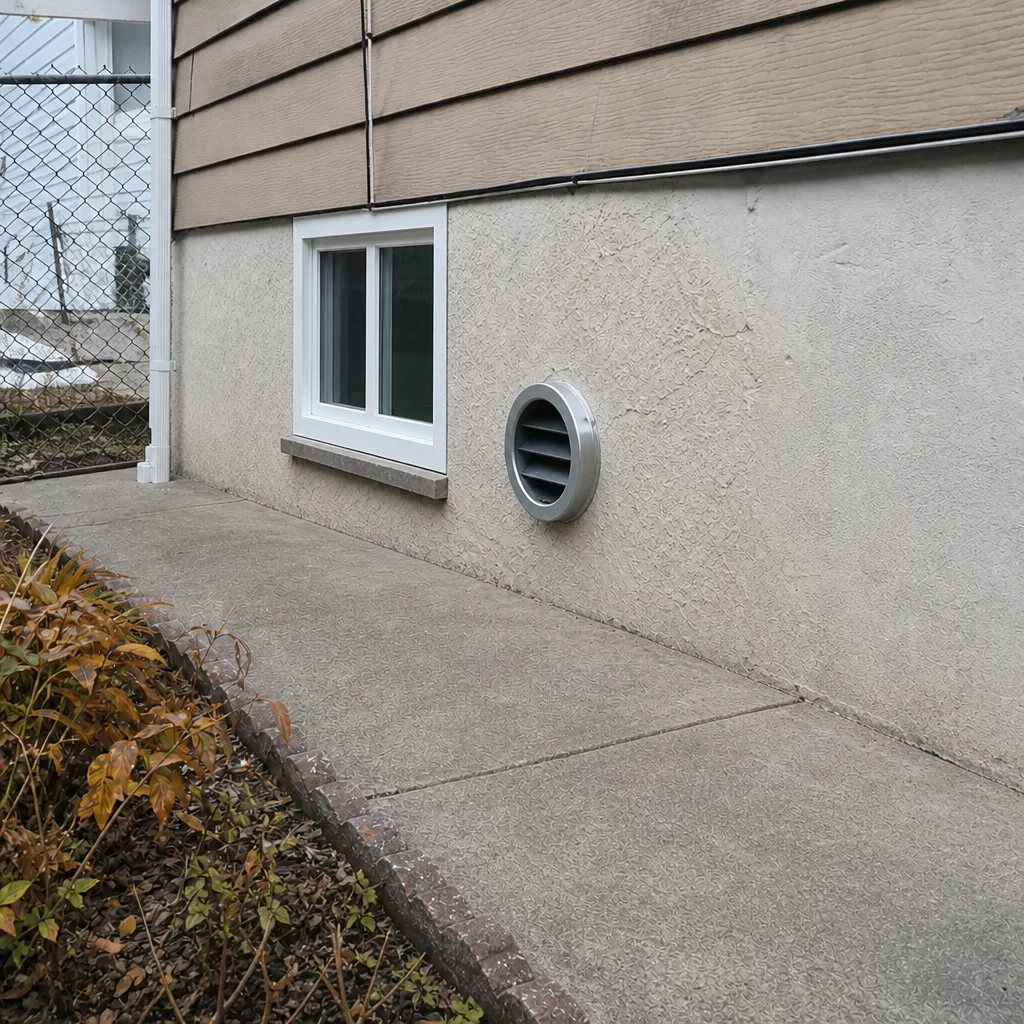
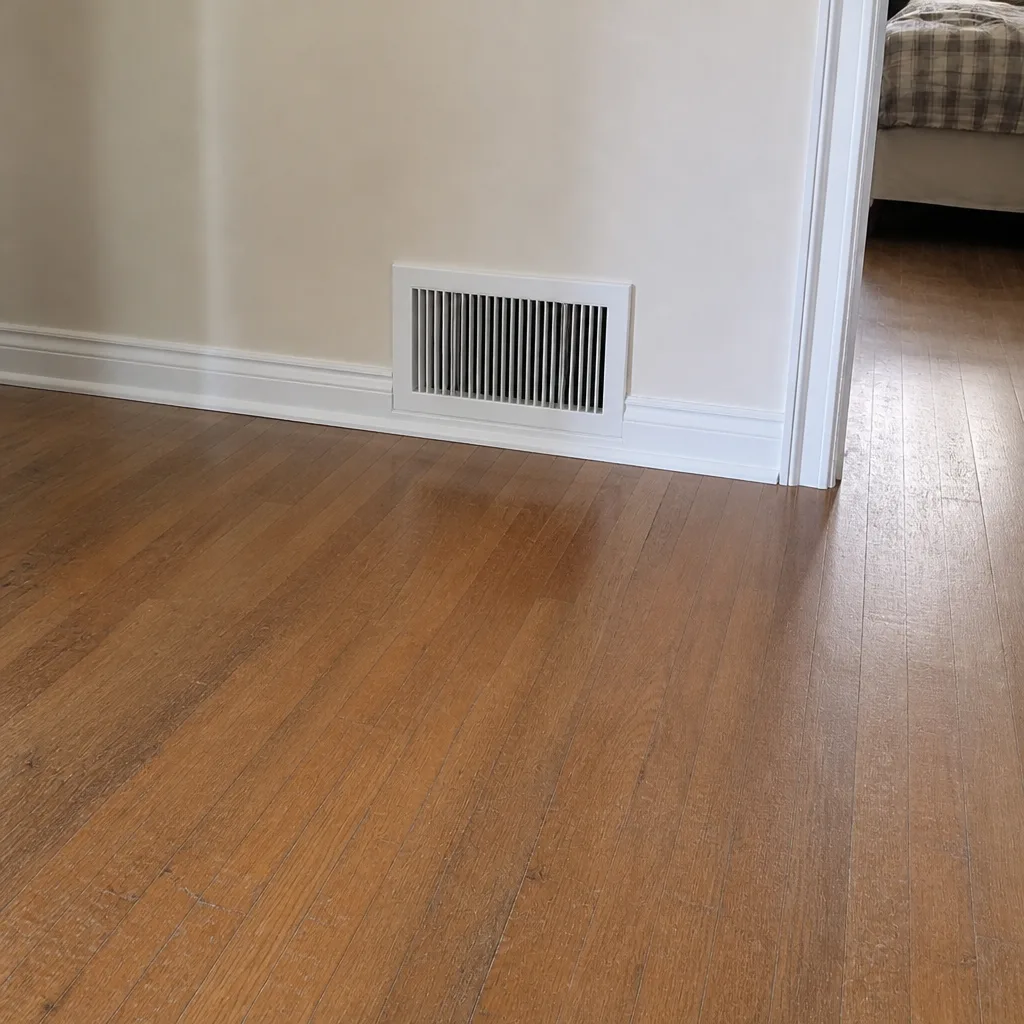
See the difference
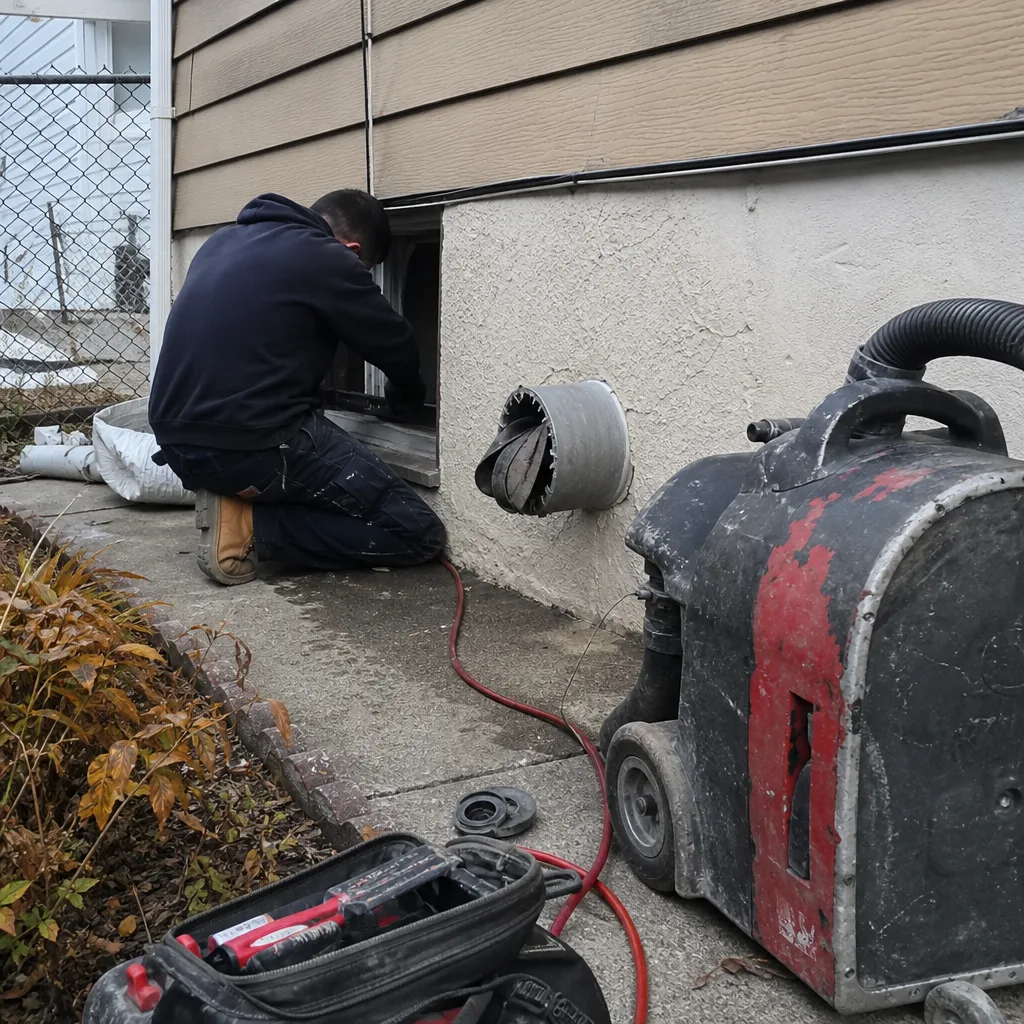 Before
 After
 Before
 After
 Before
 After
When to Call a Professional
Some diagnostics are do-it-yourself territory: check the filter, look at the register for obstructions, listen for unusual sounds. Everything past that needs a technician with the right tools, because condensation pans, blower wheels, and duct connections are easy to damage without the right equipment. Call a professional if:
- Airflow is weak across the whole house, or weak at specific vents while others are strong.
- A musty or “dirty sock” odor returns within weeks of a cleaning.
- You see visible dust at registers, especially after a recent cleaning.
- You’ve had condensation dripping near the air handler, or a coil that ices over.
- You’re a landlord in a Bensonhurst multi-unit building and tenants report uneven heating or odors.
- Your dryer takes more than one cycle to dry a load, which signals a clogged vent run.
Air Duct Cleaning Bensonhurst offers free estimates in Bensonhurst – call (833) 483-0627. We answer 24/7. Fast dispatch from 7am to 7pm, Sunday through Friday. Our technicians have up to 15 years of experience, and we bring Rotobrush, Nikro, and Abatement Technologies equipment to every diagnostic so the scope of work is measured, not guessed.
Frequently Asked Questions
Typical house-wide cleaning in Bensonhurst runs in a mid-three-figure to low-four-figure range, and it varies with the number of register runs, whether the system includes returns through wall cavities, and whether sealing or repair is added to the scope. You get one flat price per system agreed before work starts – not per-vent pricing and not a coupon figure that grows into a bigger invoice once the technician is on site. Call (833) 483-0627 for an exact quote. Estimates are free.
Cheap quotes are usually cheap because they’re scope-light: shop-vac extraction instead of Rotobrush rotary agitation, no negative-pressure testing, no before-and-after photos, no trunk or return work. The quote is smaller because the work is smaller. A whole-system scope with proper equipment costs more to deliver, and it’s the only version that actually clears the system. Call (833) 483-0627 to compare a proper scope against whatever else you’ve been quoted.
Ask for before-and-after photos of your own ducts – not stock images, not a generic gallery. Any job that can’t produce photos of the specific vents and runs it cleaned isn’t verifiable. If a company won’t commit to that in writing, that’s your answer. Call (833) 483-0627 to schedule a job where the photos are part of the deliverable.
Most Bensonhurst homes don’t need duct cleaning on a fixed calendar – it depends on the home, the filter habits, and whether pets or renovation work are factors. A better rule: clean when a symptom appears (visible dust at registers, musty odor, weak airflow that isn’t a filter or blower issue) or when the ducts haven’t been addressed since you moved in. Pressure testing tells you whether cleaning is even the right service. Call (833) 483-0627 to talk through your situation.
Sometimes, but not usually on its own. Weak airflow is more often a filter, blower, or flex duct issue than a debris build-up. Cleaning is part of the answer when contamination is present, but the diagnostic has to come first. If a technician wants to clean without checking the blower wheel and flex runs, ask why. Call (833) 483-0627 for a diagnostic-first visit.
Yes – residential and commercial both, including low-rise multi-unit buildings and rented properties. When air leaks between units or shared returns cross-contaminate, the diagnostic has to look at the whole system rather than a single apartment. We handle cleaning, repair, sealing, and air quality treatment in one scope. Call (833) 483-0627 to arrange a walkthrough.
Cleaning removes debris and contamination that’s currently in the ducts. Sealing closes the leaks that let unfiltered air back in, which is why cleaning without sealing often means the dust comes right back. They solve different problems and usually belong in the same job. Call (833) 483-0627 and we’ll tell you which your system actually needs.
The Bottom Line
Most duct problems in Bensonhurst aren’t vague dirtiness – they’re specific mechanical failures that present as symptoms: weak airflow, musty odor, uneven temperatures. The right sequence is diagnose, then scope, then clean, then verify. That means checking the blower and filter before the ducts, measuring leakage with negative-pressure testing before recommending sealing, photographing before and after so the work is provable, and offering repair and air quality treatment in the same visit as cleaning. Get the order right and the symptom you called about actually goes away. Get it wrong and you’ve paid for a cleaning that fixed nothing.
One call covers cleaning, repair, and air quality treatment. Call (833) 483-0627 for a free estimate. We answer 24/7. Fast dispatch from 7am to 7pm, Sunday through Friday.
Written by the team at Air Duct Cleaning Bensonhurst.